Soccer Guides / Laws of the game explained
Offside explained simply
Offside is not about where a player is, it is about where they are at the moment a teammate plays the ball and whether they then get involved. Here is the whole Law in plain English.
Being in an offside position is not an offence
The most common misunderstanding about Law 11 is that standing in an offside position breaks the rules. It does not. A player can stand there all afternoon. It only becomes an offence if the player is in that position at the moment a teammate plays or touches the ball and then becomes involved in active play.
When is a player in an offside position?
A player is in an offside position if both of these are true at the moment a teammate plays or touches the ball:
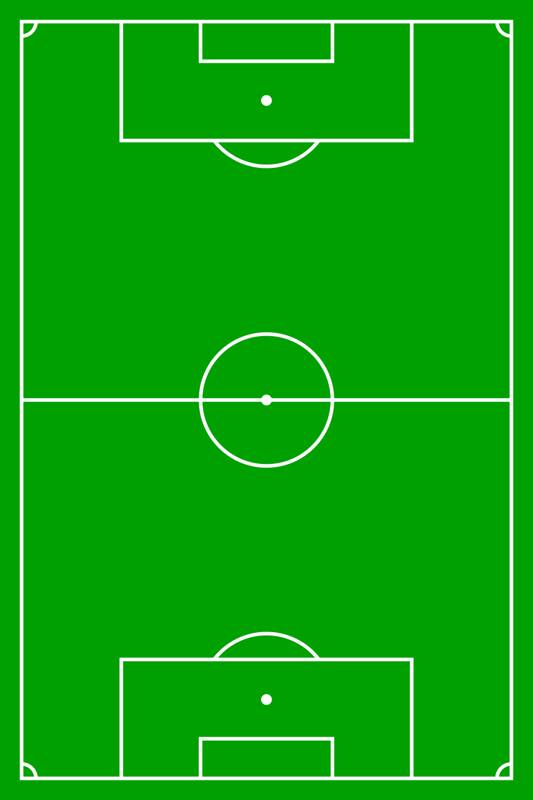
- Any part of their head, body or feet is in the opponents' half (the halfway line itself does not count as part of the opponents' half).
- Any part of their head, body or feet is nearer to the opponents' goal line than both the ball and the second-last opponent.
The second-last opponent is usually the last outfield defender, because the goalkeeper is normally the last opponent. If the keeper has come out, two outfield defenders may be the reference points instead.
The hands and arms of all players, including goalkeepers, are not considered. The upper boundary of the arm is level with the bottom of the armpit. So a striker whose shoulder is ahead of the defender can be offside, but one whose hand is ahead cannot.
A player is not in an offside position if they are level with the second-last opponent or level with the last two opponents.
Becoming involved in active play
An offside offence is only given if the player in an offside position:
- Interferes with play by playing or touching a ball passed or touched by a teammate.
- Interferes with an opponent, for example by clearly blocking the goalkeeper's line of vision, challenging for the ball, or making an obvious action that affects an opponent's ability to play the ball.
- Gains an advantage by playing the ball after it rebounds or is deflected off the post, crossbar, a match official or an opponent, or after a save by an opponent.
A deliberate play by a defender (not a save) usually "resets" the situation, so an attacker who receives the ball after a defender's deliberate pass or miskick is generally not penalized.
No offside from these restarts
There is no offside offence if a player receives the ball directly from:
- a goal kick
- a throw-in
- a corner kick
What happens after an offside offence
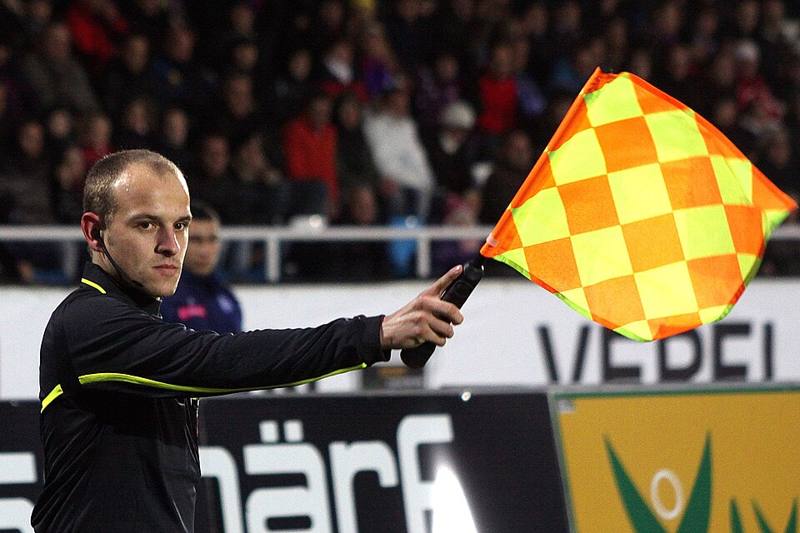
The referee awards an indirect free kick to the defending team where the offence happened, which can even be in the attacker's own half if they came back to play the ball. The assistant referee signals by raising the flag, then points it to show the position on the field.
Offside and technology
At the top level, the video assistant referee can check offside in the build-up to a goal. Many competitions now use semi-automated offside technology, which tracks players' limbs with multiple cameras and produces a 3D graphic. The 2026/27 Laws formally list semi-automated offside systems among the technologies a competition may use.
When watching a replay, look for the moment the ball leaves the passer's foot, not the moment the receiver touches it. That frame is the one that matters.
Why offside exists
Without offside, teams could station a striker beside the opposing goalkeeper all match. The Law forces attackers to time their runs and lets defenders use a high line to squeeze the field. Early versions were much stricter: before 1925, three opponents had to be between the attacker and the goal line, and the change to two was followed by a big jump in goals. Read more in our history of the rules.