Soccer Guides / Laws of the game explained
Restarts, free kicks, throw-ins, corners and goal kicks
Every way play restarts, from kick-offs and dropped balls to the new five-second countdowns for throw-ins and goal kicks.
Kick-off
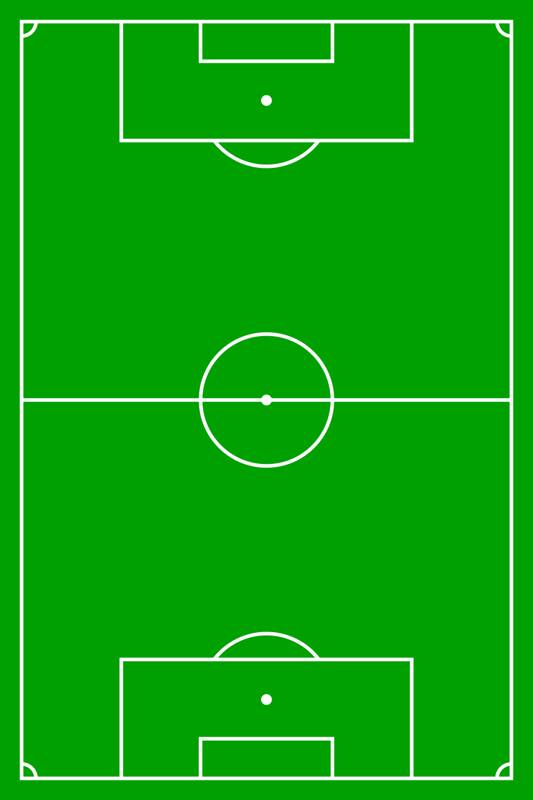
Each half, each period of extra time and every restart after a goal begins with a kick-off from the center mark. The ball can move in any direction, and it is in play once kicked and clearly moving. Opponents must be at least 9.15 m away, outside the center circle, until then. A goal can be scored directly from a kick-off against the opponents.
Free kicks
- Direct: a goal can be scored directly.
- Indirect: the referee raises an arm above the head, and the ball must touch another player before a goal can count.
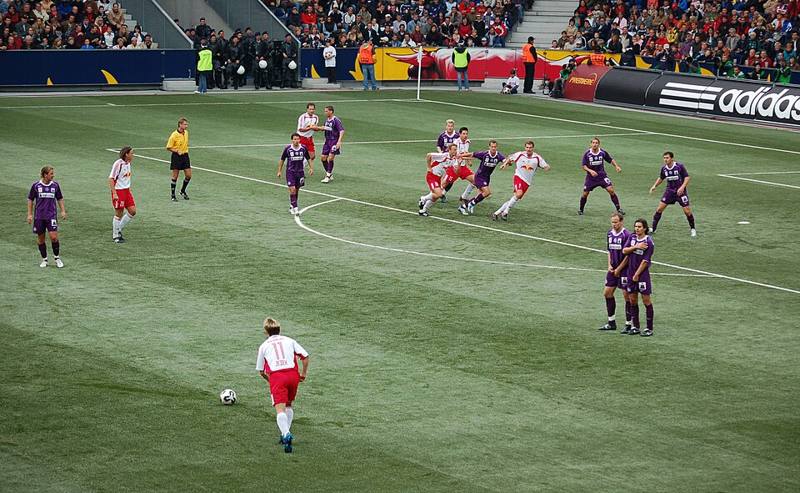
The ball must be stationary. Opponents must be at least 9.15 m away. When defenders form a wall of three or more players, attackers must stay at least 1 m from the wall. A free kick taken by the defending team in its own penalty area is in play as soon as it is kicked and clearly moves.
Throw-in
Awarded when the whole ball crosses the touchline, to the opponents of the player who last touched it. The thrower must:
- Face the field.
- Have part of each foot on the touchline or on the ground outside it.
- Throw with both hands from behind and over the head.
Opponents must stand at least 2 m from the point of the throw. A goal cannot be scored directly from a throw-in, and there is no offside.
Goal kick
Awarded when the whole ball crosses the goal line, outside the goal, after last touching an attacker. The ball is kicked from anywhere inside the goal area and is in play once kicked and clearly moving, so teammates can receive it inside the penalty area. Opponents must stay outside the penalty area until then. This change in 2019 helped teams build from the back.
Corner kick
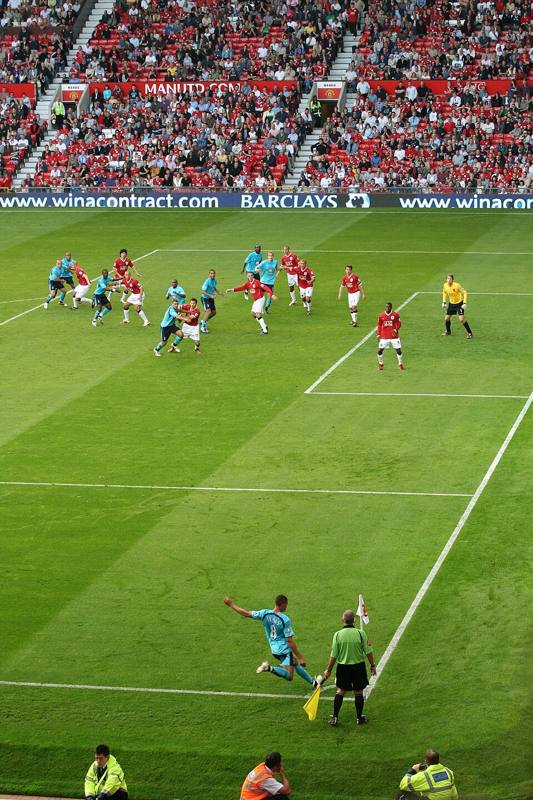
Awarded when the whole ball crosses the goal line, outside the goal, after last touching a defender. The ball is placed in the corner arc nearest to where it went out, the corner flag must not be moved, and opponents stay 9.15 m away. A goal can be scored directly from a corner.
Corners are now also awarded:
- When a goalkeeper holds the ball for more than eight seconds (introduced in 2025/26; the referee counts down the last five seconds with a raised hand).
- When a team unfairly delays a goal kick beyond a five-second countdown (2026/27).
The new five-second countdowns
From the 2026/27 Laws, if the referee decides a player is unfairly delaying a throw-in or goal kick, the referee can start a visible five-second countdown with a raised hand. If the restart is not taken in time:
| Restart delayed | Result |
|---|---|
| Throw-in | Throw-in awarded to the opponents |
| Goal kick | Corner kick awarded to the opponents |
| Goalkeeper holding the ball (8 seconds) | Corner kick awarded to the opponents |
Dropped ball
When the referee stops play for something like an injury with no offence, play restarts with a dropped ball. If play stopped inside a penalty area, the ball is dropped for the defending goalkeeper. Otherwise it is dropped for a player of the team that last touched the ball, at the place it was last touched. Everyone else must be at least 4 m away. A goal cannot be scored from a dropped ball until two players have touched it.
See set pieces for how teams design routines around corners, free kicks and long throws.