Soccer Guides / Laws of the game explained
VAR explained, what it can and cannot change
The video assistant referee can only step in for a short list of match-changing situations. Here is the list, the process, and what changed in the 2026/27 Laws.
What VAR is
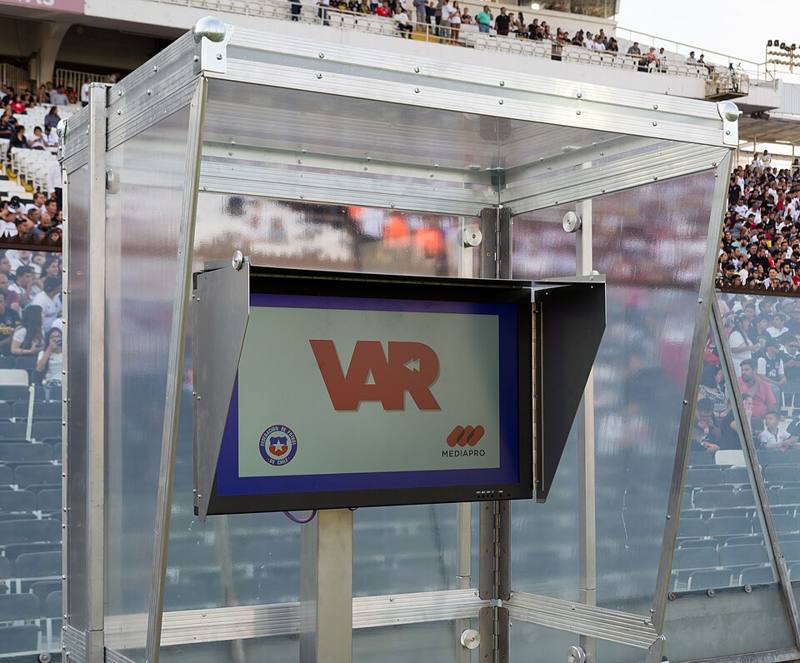
The video assistant referee (VAR) is a match official who watches replays from a video operation room and advises the on-field referee. IFAB wrote VAR into the Laws of the Game in 2018, and the 2018 FIFA World Cup was the first men's World Cup to use it. A competition can only use VAR if it meets IFAB's implementation requirements, which is why you will not see it in most amateur or lower-league games.
The guiding principle is "minimum interference, maximum benefit". VAR is not meant to re-referee the match. It exists to fix clear and obvious errors and serious missed incidents.
The situations VAR can review
| Category | Examples |
|---|---|
| Goal or no goal | Offside, handball or a foul in the build-up; ball out of play before the goal |
| Penalty or no penalty | Was there a foul or handball, and was it inside or outside the area? |
| Direct red card | Serious foul play, violent conduct, denying an obvious goal-scoring opportunity |
| Mistaken identity | The referee booked or sent off the wrong player |
| Second yellow card (new in 2026/27) | A red card that came from a clearly incorrect second caution |
| Wrongly awarded corner (optional, 2026/27) | Only if it can be corrected immediately, before play restarts |
Anything else, such as an ordinary first yellow card or a disputed throw-in, cannot be reviewed.
How a review works
- The check. The VAR team silently checks every goal, penalty decision and red card incident. Most checks finish while play continues and the fans never notice.
- The recommendation. If the VAR sees a clear and obvious error, they tell the referee through the headset.
- The decision. For factual matters, such as offside position or whether the ball crossed a line, the referee usually accepts the VAR's information directly. For judgment calls, such as how serious a tackle was, the referee normally goes to the monitor in the referee review area for an on-field review (OFR).
- The signal. The referee draws a rectangle shape in the air to show a review, then gives the final decision. The final decision always belongs to the on-field referee.
Many competitions now let the referee announce the outcome of a review over the stadium sound system, which helps fans understand what happened.
Technology around VAR
- Goal-line technology tells the referee within about a second whether the whole ball crossed the line.
- Semi-automated offside uses tracking cameras to model player limbs and draw the offside line. See our offside guide.
- Body cameras for referees and assistant referees are allowed as an option under the 2026/27 Laws.
Common VAR myths
VAR can review any decision the coach complains about.
Only the categories in the table above can be reviewed, and only if there is a clear and obvious error or a serious missed incident.
If VAR does not overturn a decision, the VAR agreed with it.
The VAR may have thought it was a close call. The bar is "clear and obvious", not "I would have given something different".
Why VAR still causes debate
Fans debate how long reviews take, how "clear and obvious" is interpreted, and whether goal celebrations are dampened while a check happens. Supporters of the system point out that it has corrected many decisions that were plainly wrong. Either way, understanding the short list of reviewable incidents makes match days much less confusing.