Soccer Guides / Laws of the game explained
Extra time and penalty shoot-outs
How knockout matches are settled when the score is level, who can take a kick in a shoot-out, and why the order of kickers matters.
When a match needs a winner
League matches can end in a draw. In knockout competitions, the rules of the competition decide what happens when the score is level. Law 10 recognizes three methods:
- Away goals (in two-legged ties). UEFA abolished this rule in its club competitions from the 2021/22 season, but other competitions may still use it.
- Extra time.
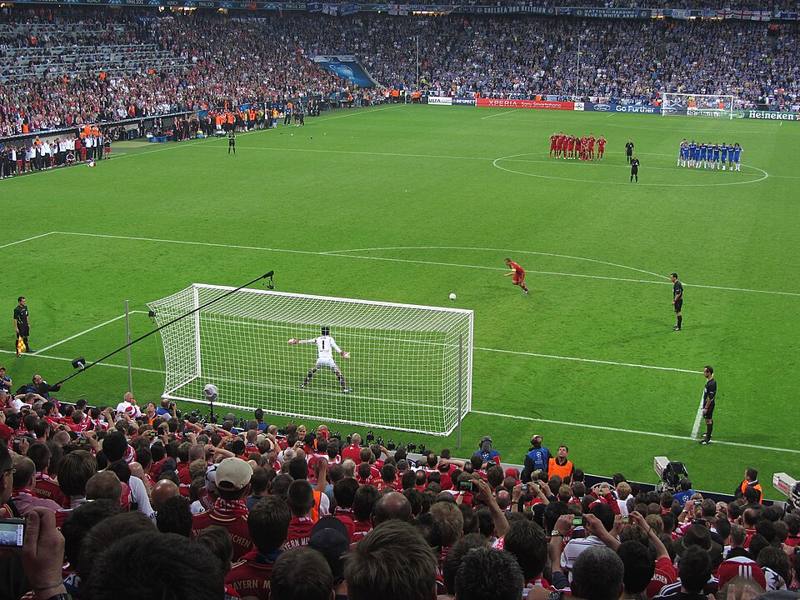
- Kicks from the penalty mark, commonly called a penalty shoot-out.
Some competitions skip extra time and go straight to penalties after 90 minutes, especially in youth tournaments and some cup rounds.
Extra time
Extra time is two equal periods of no more than 15 minutes each. There is a short break before extra time starts, and a brief pause between the two periods. Both periods are played in full: the old golden goal (first goal wins) and silver goal experiments of the 1990s and early 2000s were abandoned in 2004.
Competitions may allow each team one additional substitute and one additional substitution opportunity in extra time. See substitutions.
The penalty shoot-out step by step
- The referee tosses a coin to choose the goal, unless safety or the field condition decides it.
- A second coin toss decides which team chooses to kick first or second.
- Only players who were on the field at the end of the match (including extra time) can take part. Players temporarily off the field for injury or equipment issues may also take part.
- If one team has more eligible players than the other, it must "reduce to equate", removing players so both teams have the same number.
- Teams take turns. Each team takes five kicks unless the result is decided earlier, for example if one team has scored three and the other has missed three of its first three.
- If the score is level after five kicks each, the shoot-out continues in pairs (sudden death) until one team scores and the other misses in the same round.
- Every eligible player must take a kick before any player can take a second.
A goalkeeper who is injured during the shoot-out and cannot continue may be replaced by a named substitute or a player excluded to equate numbers, provided the team has not used its maximum substitutes.
Rules that differ from a normal penalty
- The kicker cannot score from a rebound. Once the ball stops moving, goes out of play, or is played after the keeper's save, the kick is over.
- Only the kicker and the two goalkeepers are allowed away from the center circle. The kicker's own goalkeeper stands at the junction of the goal line and the penalty area line.
- Goals scored in a shoot-out do not count as match goals in statistics. The match itself is recorded as a draw.
Does kicking first help?
Some studies have suggested a small advantage for the team that kicks first, which led IFAB to trial an alternative "ABBA" kicking order. The trial was not adopted, and the alternating "ABAB" order remains the standard.
When you watch a shoot-out live, track the scores in a grid. Our live-score terms guide explains how apps show shoot-out results, such as "1-1 (4-3 pens)".