Soccer Guides / Skills and training
Goalkeeping basics
The ready position, catching shapes, diving, angles, crosses and distribution, with simple drills for young and adult keepers.
The ready position
Before every shot, a goalkeeper sets in the ready position:
- Feet about shoulder-width apart, weight on the balls of the feet.
- Knees slightly bent, body leaning a little forward.
- Hands at waist height, palms facing forward.
- Head still, eyes on the ball.
Being "set" as the shooter strikes the ball matters more than being in the perfect spot. A keeper who is still moving cannot push off quickly.
Catching shapes
| Ball height | Technique | Name |
|---|---|---|
| Chest to head height | Hands form a W shape behind the ball, thumbs nearly touching | The W or contour catch |
| Waist or stomach height | Scoop the ball into the body, forearms underneath | The basket catch |
| Ground ball | Kneel or bend with legs together, scoop the ball up | The scoop |
Always try to get your body behind the ball, so if your hands miss, your body still stops it.
Angles and positioning
Imagine a line from the ball to the center of the goal. Stand on that line. Moving forward along it "narrows the angle" and makes the goal look smaller to the shooter, but leaves you vulnerable to a chip. Many coaches teach keepers to use the six-yard box and the posts as reference points, and to touch a post occasionally to re-orient.
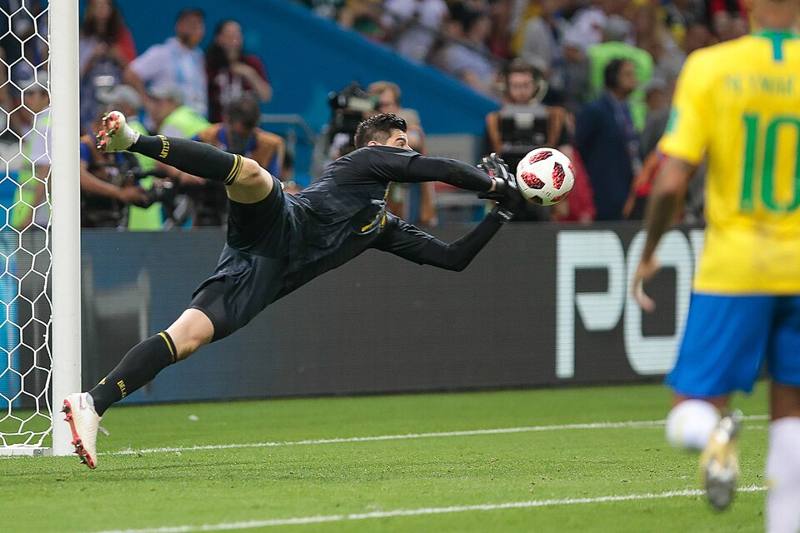
Diving
- Step toward the ball with the near foot.
- Push off and dive sideways, not backward.
- Lead with the hands, catching or parrying.
- Land on your side, not your stomach or elbows.
When you cannot hold the ball, parry it wide of the goal rather than back into the danger zone.
Crosses and communication
Shout early and clearly: "Keeper!" when coming for the ball, "Away!" when you want defenders to clear. Take crosses at the highest point, with one knee raised for protection. If you cannot catch, punch the ball high and wide with one or two fists.
Distribution
Modern keepers are playmakers. Learn to:
- Pass short with both feet.
- Throw overarm for distance and underarm for accuracy.
- Kick out of the hands (punt or drop-kick) and from the ground on goal kicks.
Remember the Laws: you cannot handle a deliberate back-pass from a teammate's foot, and holding the ball for more than eight seconds gives the opponents a corner kick.
Simple drills
- Handling ladder: a partner throws to chest, waist and ground. 10 of each.
- Set and save: take a small hop, land in the ready position, then save a shot.
- Side-to-side: shuffle between cones, set, and save a low shot to either side.
- Cross catching: catch 20 crosses from both wings.
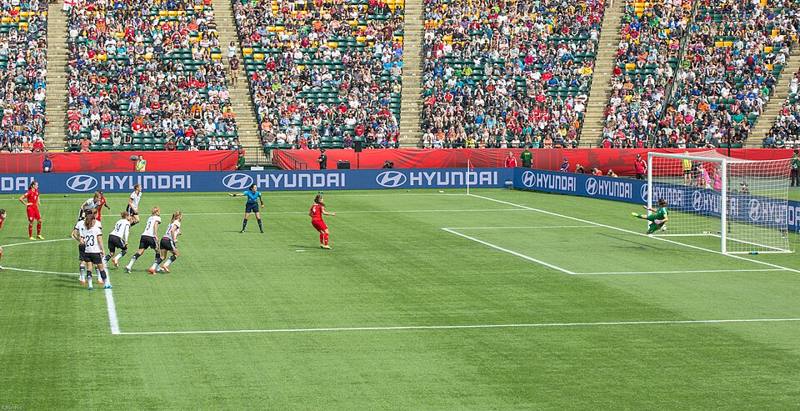
- Penalty study: face penalties and practice staying on the line until the kick.
Young keepers should learn diving on soft ground or mats, and wear gloves that fit properly. Never dive head-first at a striker's feet.