Soccer Guides / Skills and training
Shooting and finishing
How to strike a powerful shot, when to place the ball instead, how to take a penalty and the finishing drills strikers use.
Power or placement?
Most goals are scored from inside the penalty area, often with a simple side-foot finish. Power helps from distance, but accuracy wins more often close to goal. A useful rule of thumb: the closer you are, the more you should prioritize placement and the low corners.
The instep drive (laces shot)
- Approach the ball at a slight angle.
- Plant the standing foot beside the ball, pointing at the target.
- Point the toes of the kicking foot down and lock the ankle.
- Keep your knee and head over the ball to keep it low.
- Strike through the center of the ball with the laces.
- Land on your kicking foot as you follow through.
If the ball flies over the bar, you are usually leaning back or striking too low on the ball.
Other finishes
| Finish | When to use it | Key point |
|---|---|---|
| Side-foot placement | Close range, plenty of time | Pick a corner early, stay calm |
| Curled shot | From the edge of the area, around a keeper or defender | Strike the outside half of the ball with the inside of the foot |
| Volley | Ball dropping from the air | Watch the ball onto the foot, keep your body over it |
| Half-volley | Ball just after it bounces | Strike as it rises, keep it down |
| Chip | Keeper rushing out | Slide the foot under the ball with little follow-through |
| Header | Crosses into the box | Use the forehead, aim down toward the goal line |
Picking your spot
Low shots toward the corners are hard for goalkeepers because a keeper has to get down to them. Shooting across the goalkeeper toward the far post also creates rebound chances for teammates. Analysts measure the quality of a chance with expected goals (xG), and shots from central positions close to goal carry the highest values.
Penalties
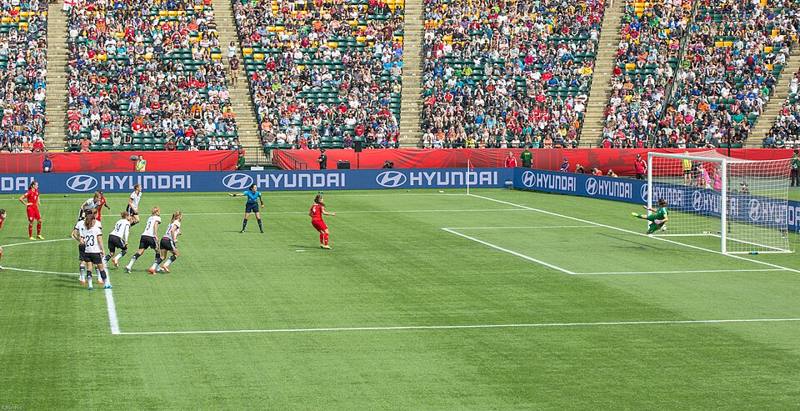
Pick a routine and stick to it: same run-up length, same breathing, same decision made before you start. Some players commit to a side; others watch the keeper. Practice under pressure, for example with teammates watching or a consequence for misses. The full rules are in our penalty kick guide.
Finishing drills
- Rapid fire: a server rolls balls into the area one after another. Finish first time with alternating feet.
- 1v1 with keeper: start 30 m out with a defender chasing from behind.
- Crossing and finishing: wingers cross, two strikers attack near post and far post.
- Weak-foot finishing: ten finishes from the penalty spot area with the weaker foot only.
- Rebounds: after each shot, the shooter follows in for any rebound.
Mental side
Strikers miss often. Even top professionals convert only a minority of their shots. The key is staying calm, choosing the right finish and continuing to get into scoring positions.
After every training session, take 10 shots with each foot, aiming low into a target. Write down how many you hit.